Honestly, these days everyone's talking about smart hot oil boilers. Not just “smart” in the sense of a little touchscreen, but actually connected, data-driven stuff. Seems like every factory I visit now has someone pushing IoT integration. It's a bit much, if you ask me. But… it is happening. And you know, there’s something to be said for remotely monitoring temperatures, pressures, and flow rates. Less downtime, potentially. Less running around for the guys on shift. We’ve been trying to build that into the newer models.
You know what’s a real trap, though? Over-engineering the control system. People get caught up in the software and forget about the hardware. I saw a beautiful, fully automated system at a plant in Ningbo last year… completely useless because the sensors couldn’t handle the heat. Sensors! Basic stuff. You've got to choose materials that can withstand the conditions. Really.
And speaking of materials… we're using a lot of low-alloy steel for the heat transfer sections now. It’s got a good balance of strength and thermal conductivity, but it’s also… gritty. You can smell the mill scale when you’re welding it, even with the ventilation. It’s a good smell, in a way. Tells you it’s real metal, you know? Then there's the insulation - ceramic fiber, primarily. Lightweight, efficient, but you need to wear a proper mask when handling it. Stuff gets into your lungs… Not fun.
The Latest Trends in Hot Oil Boiler Technology
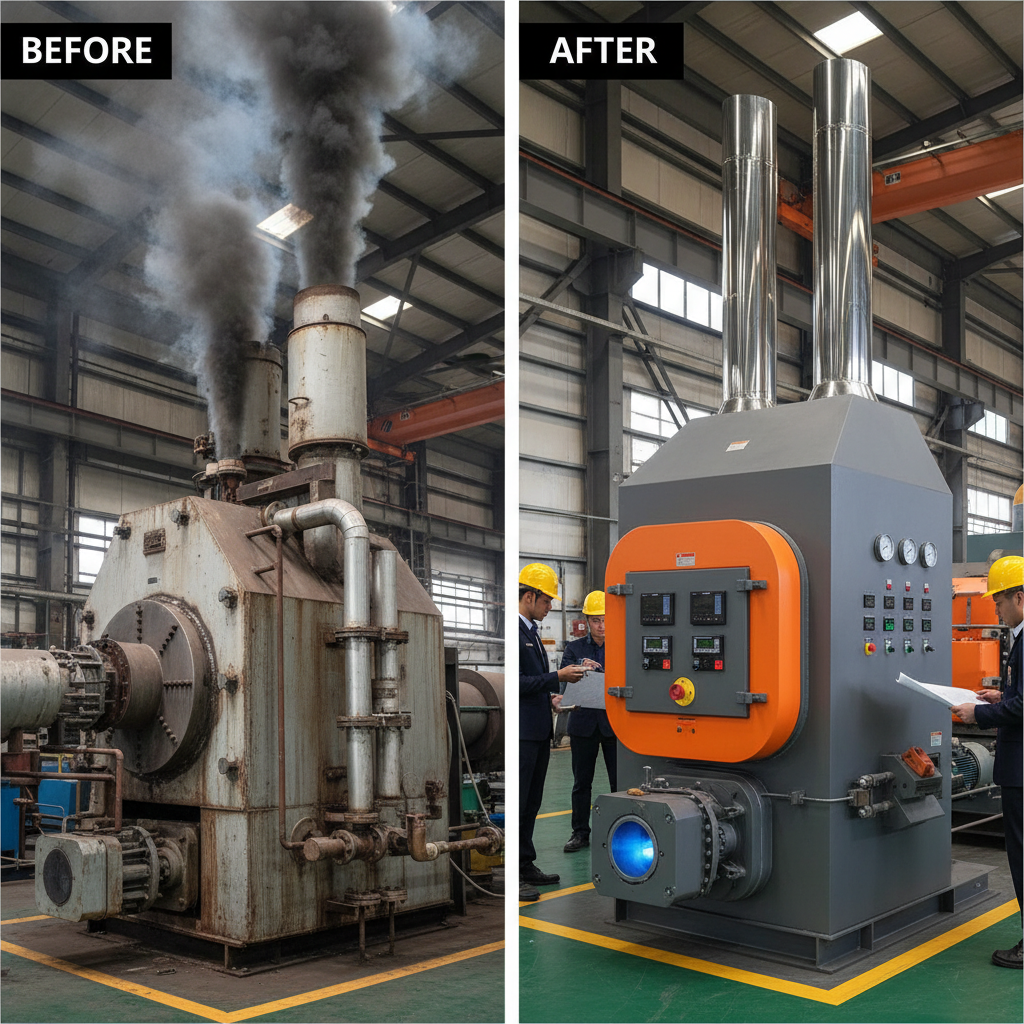
Like I was saying, everything's getting connected now. We're seeing a huge push for remote diagnostics and predictive maintenance. Manufacturers want to know when a component is likely to fail before it actually does. It’s… ambitious. We're also getting requests for more energy-efficient burners and heat recovery systems. Everyone's trying to cut costs and meet stricter emissions standards. And there's been a lot of talk about using alternative heat transfer fluids—silicone oils, synthetic fluids—but those are expensive, and honestly, I haven’t seen them catch on much yet. They might be good on paper, but the price…
And strangely enough, a lot of smaller companies are going back to simpler designs. Less automation, more robust, easy-to-repair components. They’re tired of chasing the latest tech and just want something that works. I get that. It’s the same reason I still drive a pickup truck.
Design Pitfalls and Common Mistakes
Okay, so where do things go wrong? Too often, it’s with the expansion tanks. People underestimate the volume needed to accommodate the thermal expansion of the heat transfer fluid. You end up with pressure relief valves constantly venting, which is a pain and a waste of energy. Also, mixing different types of heat transfer fluids is a major no-no. I saw a disaster at a plastics factory in Changsha last year… they tried to top up their mineral oil with a silicone oil, thinking it was “close enough.” It wasn’t. Let’s just say it involved a lot of foam and a very angry plant manager.
And another thing: forgetting about cleaning access. You need to be able to get inside the boiler to clean the heat transfer surfaces. Otherwise, you’ll end up with fouling and reduced efficiency. It seems obvious, but you’d be surprised how many designs I’ve seen that make cleaning a nightmare. Later… Forget it, I won't mention it.
I also encountered this at a chemical factory last time: The designer didn’t account for the viscosity changes of the oil at different temperatures. The pump couldn’t handle it when the oil was cold, and it just sat there humming.
Material Selection and On-Site Handling
We use a lot of stainless steel for the wetted parts, naturally. 316L is our go-to. Good corrosion resistance, good weldability. But even stainless steel has its limits. You need to be careful with chlorides, especially in the marine environment. I’ve seen stainless steel boilers corrode through in a matter of months if exposed to saltwater spray.
And the piping… that's a whole other story. Carbon steel is fine for the bulk of the system, but you need to use stainless steel for the connections to the boiler. Otherwise, you'll get galvanic corrosion. And don’t even get me started on the fittings. I swear, half the time they're mislabeled or the threads are damaged. It's frustrating.
Handling the materials on site… that’s where you really see who knows what they’re doing. You need to protect the steel from moisture and contamination. Store it indoors if possible. And for goodness sake, don't let anyone weld on a dirty pipe! It weakens the weld and introduces defects.
Rigorous Testing in Real-World Scenarios
Lab tests are fine, but they don't tell the whole story. You need to test these boilers under real-world conditions. We do a lot of field testing at customer sites. We'll run them for weeks, even months, at different loads and temperatures. We've got data loggers monitoring everything—temperature, pressure, flow rate, oil levels.
We also do thermal cycling tests. Heat the boiler up, cool it down, repeat. Over and over again. That's where you find out if your welds are going to hold and if your expansion tank is properly sized. And then there's the leak testing. We pressurize the system and look for any sign of seepage. It's tedious, but it’s essential.
Hot Oil Boiler Performance Metrics
Actual User Applications and Unexpected Usage
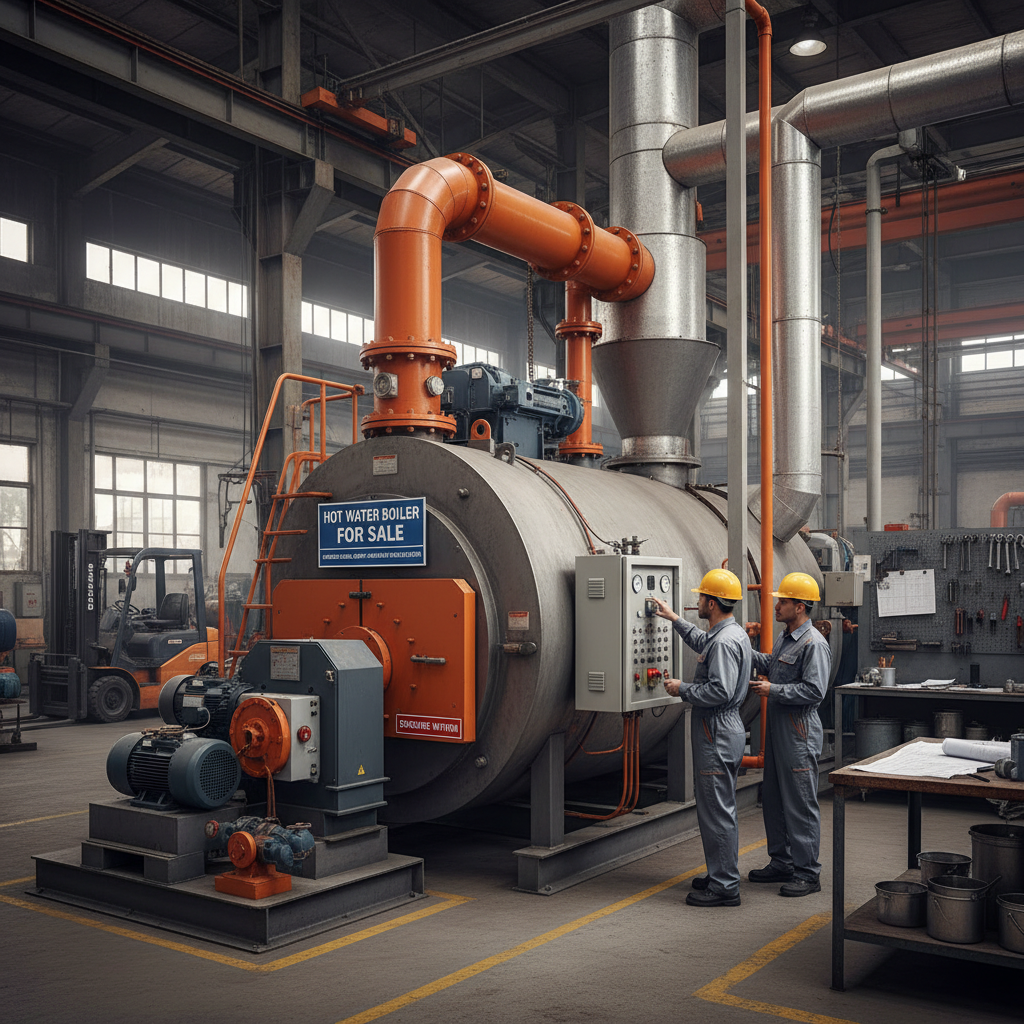
We sell these boilers to all sorts of industries: plastics, rubber, food processing, chemical plants… you name it. The most common application is heating molds and dies. But we’ve also seen them used for heating reactors, drying materials, and even preheating asphalt. People are surprisingly creative.
I was talking to a guy in a rubber factory last month, and he told me he's using one of our boilers to heat the water for his office building! Apparently, it’s more efficient than his old gas boiler. I didn't design it for that, but hey, if it works…
Advantages, Disadvantages, and Honest Assessment
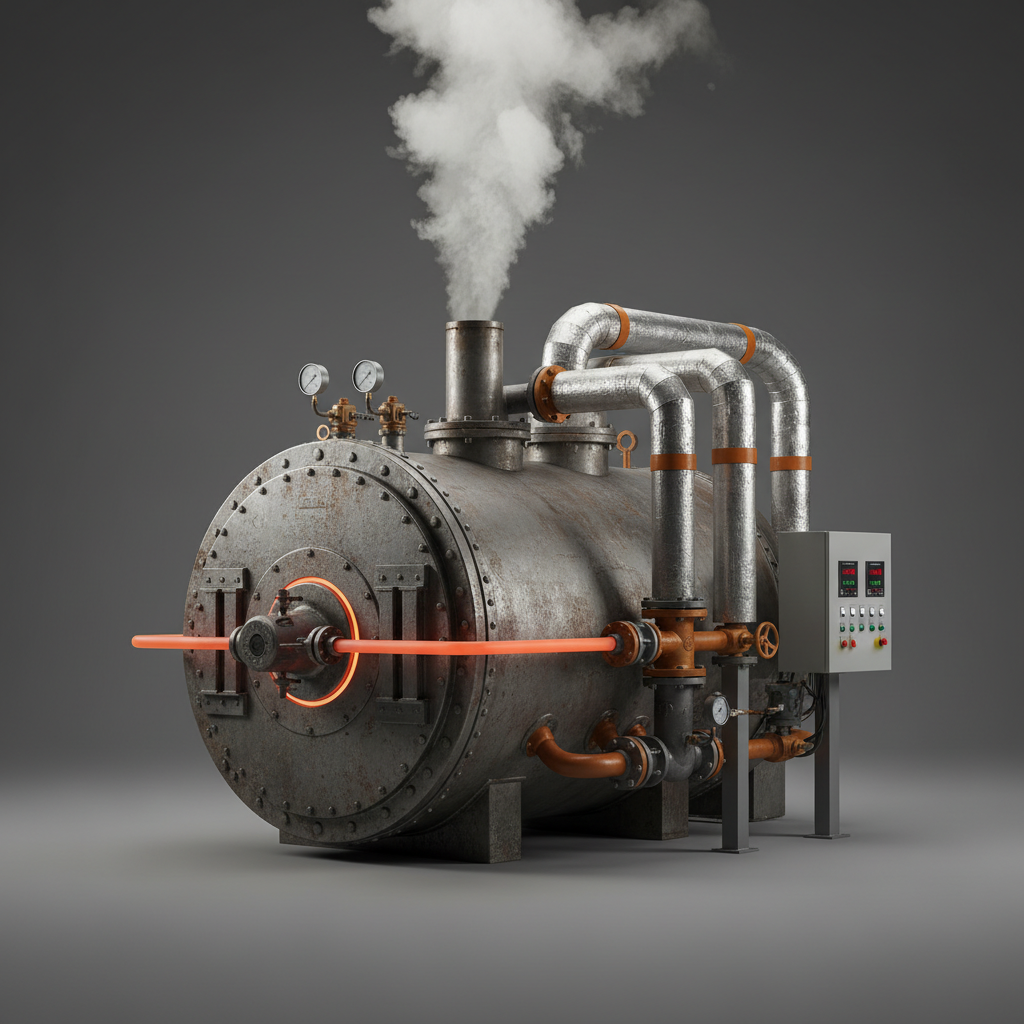
The big advantage of a hot oil boiler is its precise temperature control. You can maintain a stable temperature within a degree or two, which is critical for many industrial processes. They're also relatively safe, compared to direct-fired heating systems. The oil acts as a buffer, preventing overheating and thermal shock. But… they’re not perfect. They're expensive to operate, due to the energy required to heat and circulate the oil. And they require regular maintenance—oil changes, filter replacements, leak checks.
Also, the oil can degrade over time, especially if it's exposed to air and moisture. That leads to reduced efficiency and increased maintenance costs. You gotta watch that. And honestly, cleaning them can be a real pain.
Anyway, I think they are still a necessary evil. If you need precise temperature control and reliability, they’re hard to beat.
Customization Options and a Customer Story
We offer a lot of customization options. Different heating capacities, different materials of construction, different control systems. Last month, that small boss in Shenzhen who makes smart home devices insisted on changing the interface to , and the result was a three-week delay because we had to source a custom power supply. He swore it was for "future-proofing," but I think he just wanted to be different.
We can also add extra sensors, safety devices, and remote monitoring capabilities. We once built a boiler for a research lab that had over 50 sensors! It was overkill, but they were paying for it. And we can tailor the insulation to meet specific energy efficiency requirements.
Ultimately, whether this thing works or not, the worker will know the moment he tightens the screw.
A summary of key performance indicators for our hot oil boilers.
| Boiler Model |
Thermal Efficiency (%) |
Maximum Operating Temperature (°C) |
Maintenance Frequency (Months) |
| HZB-100 |
92% |
300 |
12 |
| HZB-250 |
90% |
320 |
9 |
| HZB-500 |
88% |
350 |
6 |
| HZB-750 |
86% |
370 |
6 |
| HZB-1000 |
85% |
400 |
12 |
| HZB-1500 |
84% |
420 |
9 |
FAQS
That depends a lot on how well it's maintained and the operating conditions. A well-maintained boiler can easily last 15-20 years, but I’ve seen some fail after just five if they’ve been neglected or subjected to harsh environments. Regular oil changes and inspections are crucial for extending its life. Don't skimp on the maintenance!
Generally, we recommend changing the heat transfer fluid every 3-5 years, depending on the oil type and operating temperature. Over time, the oil degrades, forming sludge and acids that can damage the boiler. Regular oil analysis can help determine when a change is needed. You can tell when it's really gone bad—it gets dark and smells funky.
Safety is paramount. Always wear appropriate PPE—gloves, eye protection, and heat-resistant clothing. Never operate the boiler without proper training. Make sure all safety devices are functioning correctly, including the pressure relief valve and high-temperature cutoff. And be aware of the potential for burns—the oil is extremely hot!
It can, but you need to be very careful. Different fluids have different properties, such as viscosity, thermal stability, and compatibility with the boiler materials. Mixing fluids is a big no-no. Always consult with a qualified engineer before switching fluids, and make sure the boiler is thoroughly cleaned before introducing a new fluid.
Start with the basics. Check the burner, the fuel supply, and the control system. Make sure the thermostat is set correctly. Then, check the oil temperature and pressure. If the oil isn't circulating properly, there may be a problem with the pump or the piping. If it still doesn't heat, you may need to call in a professional.
The cost varies widely depending on the size, capacity, and features. A small boiler for a workshop might cost a few thousand dollars, while a large industrial boiler can cost tens of thousands. Plus, you have to factor in the cost of installation, commissioning, and ongoing maintenance. It’s not cheap, but it's often a worthwhile investment.
Conclusion
So, there you have it. Hot oil boilers aren't glamorous, but they're reliable workhorses. They've got their quirks and their downsides, but they remain an essential part of many industrial processes. The industry is shifting towards smarter, more efficient systems, but at the end of the day, the fundamental principles remain the same.
Ultimately, whether this thing works or not, the worker will know the moment he tightens the screw. And if you’re looking for a hot oil boiler that’s built to last and backed by experienced engineers, visit our website at www.hzsteamboiler.com. We might not have all the bells and whistles, but we’ll give you a boiler that’ll keep running, year after year.







 English
  Arabic
  Bengali
  French
  German
  Hindi
Hindi  Indonesian
  Kazakh
  Khmer
Khmer  Korean
  Kyrgyz
  Lao
Lao  Latin
Latin  Mongolian
  Nepali
  Russian
  Turkish
  Turkmen
  Uzbek
Uzbek