

When evaluating industrial heating investments, the 8 ton boiler price is rarely a static number but rather a reflection of specific capacity requirements and technical specifications. For facility managers in the boiler manufacturing sector, selecting a system that balances initial capital expenditure with long-term operational efficiency is critical. The challenge lies in distinguishing between low-cost entry models and high-performance systems that reduce fuel consumption over a fifteen-year lifespan.
Understanding the price drivers requires a deep dive into the medium used for heat transfer. Whether a business requires a Steam Boiler, Hot Water Boiler, or a Thermal Oil Boiler, the cost is influenced by the operating pressure and the precision of temperature adjustment. In industrial settings, a boiler that can maintain high thermal efficiency under fluctuating working conditions provides a significantly better return on investment than one with a lower sticker price but higher energy waste.
This analysis explores the technical variables that dictate the 8 ton boiler price, comparing different heating mediums and exploring how engineering choices impact the total cost of ownership. By examining the relationship between rated thermal power and design working temperatures, procurement officers can make informed decisions that align with their specific manufacturing goals.


Industrial boiler pricing is fundamentally tied to the rated thermal power and the capacity to generate steam or hot water consistently. For a system in the 8-ton range, the cost is not merely about the size of the vessel but the sophistication of the heat exchange surface and the quality of the materials used to withstand high pressures. A boiler designed for longevity, such as those with a lifespan up to 15 years, incorporates thicker steel and advanced welding techniques that increase the initial cost but lower the annual depreciation rate.
Moreover, the fuel type—whether gas, coal, or biomass—significantly alters the architectural design of the combustion chamber. Systems capable of handling multiple fuel types or those designed for biomass often require more complex filtration and feeding mechanisms, which adds to the base price. Hebei Hongze Boiler Manufacturing Co., Ltd. leverages over 30 independent patents to optimize these designs, ensuring that the structural integrity meets environmental requirements while maintaining a competitive price point for large-scale industrial users.
The primary technical driver of cost is the ability to maintain stable heating and precise temperature adjustment under varying loads. High-end systems integrate complete operation control and safety detection devices, which prevent costly downtime and protect the equipment from overheating or pressure surges. These safety redundancies are essential for compliance with international industrial standards and directly influence the final quote provided to the customer.
The true value of an 8 ton boiler is found in its thermal efficiency; systems that maintain peak efficiency across different working conditions reduce fuel consumption by a significant percentage, effectively paying back the price difference through lower monthly utility bills.
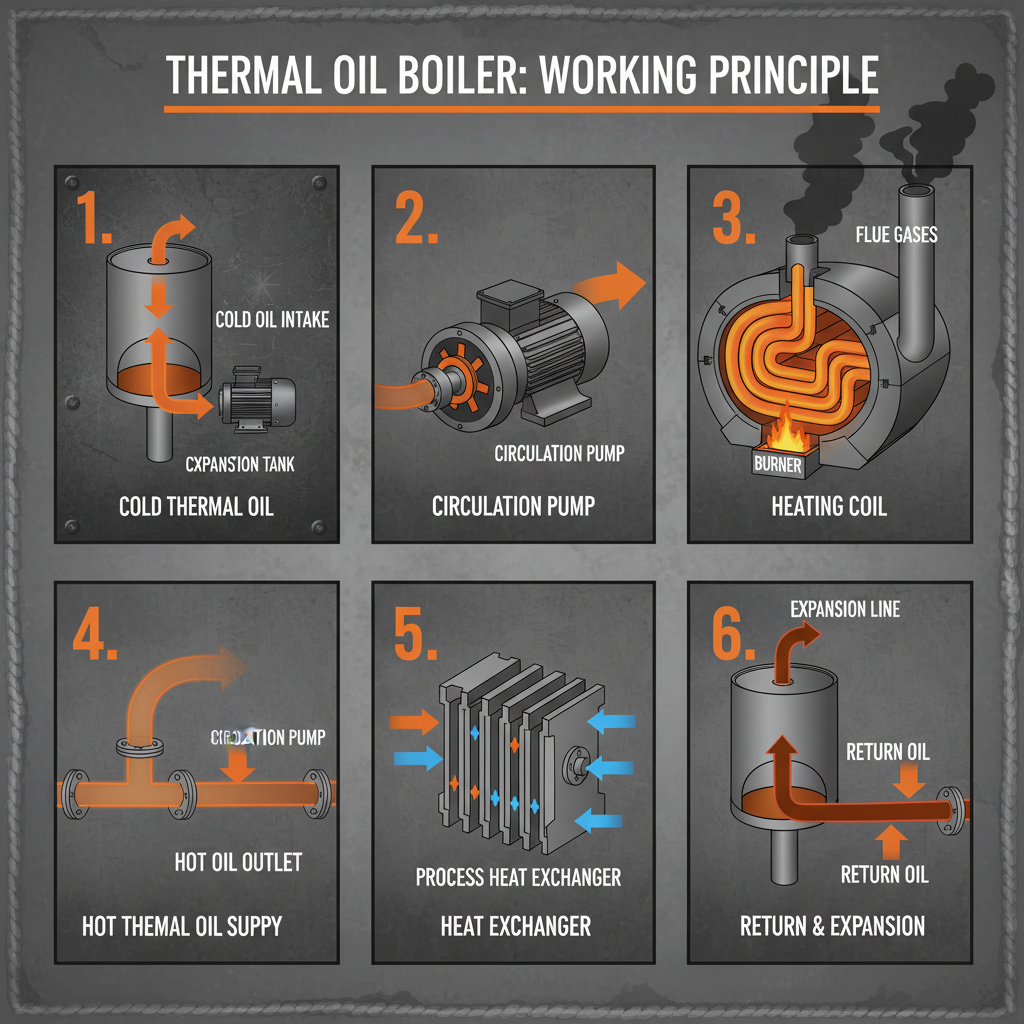
Additionally, the choice of heating medium plays a pivotal role. Thermal oil boilers, for instance, can obtain higher working temperatures under lower operating pressures compared to steam boilers. This allows for a different set of materials and safety specifications, often simplifying the closed-loop heating system and improving the efficiency of heat utilization, which can optimize the total project cost for specific chemical or textile processes.
When analyzing the cost-to-performance ratio, it is essential to look at the rated thermal power in Kw and Kcal/h. For example, a system like the YQW series demonstrates how scaling thermal power—from 350Kw up to 4000Kw—affects the overall efficiency and oil capacity. The goal is to match the boiler's output precisely with the facility's demand to avoid the inefficiencies of "short-cycling," where a boiler is too large for the load, leading to increased wear and fuel waste.
By utilizing liquid-phase heat transfer and closed-loop systems, manufacturers can ensure that heat is delivered with minimal loss. This technical approach is especially valuable in water-poor regions where replacing steam boilers with water-medium systems reduces the overall environmental footprint and operating costs.
An 8-ton capacity boiler is typically deployed in mid-to-large scale manufacturing plants where consistent thermal energy is required for processes such as sterilization, dyeing, or chemical synthesis. In these environments, the boiler must be capable of handling continuous operation without significant drops in pressure. The ability to carry out stable heating ensures that the production line does not suffer from temperature fluctuations, which could otherwise compromise product quality.
Beyond heavy industry, these systems are frequently used in large commercial complexes and institutional facilities for centralized heating. The flexibility to choose between steam and thermal oil allows the operator to customize the heat delivery based on whether the priority is high-temperature precision or high-volume steam distribution, ensuring the equipment fits the specific architectural and operational constraints of the site.
The industry is moving toward highly automated production and smarter control systems to further reduce human error and energy waste. Integration of IoT sensors for real-time monitoring of flue gas emissions and thermal efficiency allows operators to adjust combustion parameters on the fly. This shift not only helps in meeting stricter environmental regulations but also extends the lifespan of the boiler by preventing suboptimal operating conditions.
Moreover, there is a growing trend toward the adoption of biomass and hybrid-fired systems to decouple energy costs from volatile fossil fuel markets. By designing boilers that can flexibly transition between fuel sources, companies can hedge against price spikes while reducing their carbon footprint.
Future innovations are likely to focus on enhancing heat recovery systems, where waste heat from the exhaust is recaptured to preheat feed water. This cycle further increases the total thermal efficiency, making the initial investment in a high-quality boiler even more justifiable over its long-term operational lifecycle.
One of the most significant challenges in boiler procurement is the gap between the quoted price and the total installed cost. Buyers often overlook the expenses associated with piping, safety valve installation, and water treatment systems. To mitigate this, it is advisable to work with manufacturers who provide comprehensive design and installation services, ensuring that the boiler is integrated seamlessly into the existing infrastructure.
Maintenance is another critical factor; a boiler that is cheap to buy but expensive to maintain will quickly become a liability. Regular servicing and the use of high-quality water treatment are necessary to prevent scale buildup, which can drastically reduce thermal efficiency and lead to premature tube failure.
Finally, ensuring that the equipment meets local environmental and safety codes is non-negotiable. Choosing a manufacturer with a proven track record of patents and certifications ensures that the product will pass inspections and operate safely within the designated pressure limits.
| Criteria | Low-Cost Option | Premium Engineering | Impact on ROI |
|---|---|---|---|
| Material Grade | Standard Carbon Steel | High-Grade Alloy | Longer Lifespan |
| Thermal Efficiency | Basic (75-82%) | Optimized (≥90%) | Lower Fuel Cost |
| Control System | Manual/Basic | Fully Automated | Lower Labor Cost |
| Safety Devices | Minimum Required | Redundant Sensors | Reduced Risk |
| Warranty | Limited/Short | 12 Months Comprehensive | Predictable OpEx |
| Delivery Time | Variable | Automated/Fast | Earlier Start-up |
The price is primarily driven by the rated thermal power, the choice of heating medium (steam vs. thermal oil), the grade of materials used for pressure vessels, and the level of automation in the control systems. Additionally, the fuel type and the required thermal efficiency rating significantly impact the final cost.
Higher thermal efficiency means the boiler converts a larger percentage of fuel energy into usable heat. Even a 5% increase in efficiency can save thousands of dollars in annual fuel costs, meaning a more expensive, high-efficiency boiler often has a lower total cost of ownership than a cheaper, less efficient model.
Steam boilers are ideal for high-volume heat distribution and sterilization. Thermal oil boilers are superior when you need higher operating temperatures at lower pressures, which improves safety and reduces the risk of vessel rupture in high-heat industrial processes.
A well-engineered boiler, such as those produced by Hebei Hongze, can have a lifespan of up to 15 years. This longevity depends heavily on the quality of the initial construction and the rigor of the ongoing maintenance and water treatment schedules.
Standard professional warranties usually cover a period of 12 months. During this time, any manufacturing defects or internal component failures are typically repaired free of charge, providing the buyer with a safety net during the initial commissioning phase.
Delivery times vary based on customization, but manufacturers with fully automated production equipment can ensure faster lead times. Installation depends on site preparation, but professional installation is recommended to ensure the system operates at its rated efficiency.
Determining the right 8 ton boiler price requires a transition from looking at the initial purchase cost to analyzing the lifecycle value. By prioritizing thermal efficiency, material durability, and precise temperature control, businesses can ensure their heating infrastructure supports production growth without becoming an energy drain. The integration of advanced safety devices and automated controls is no longer a luxury but a necessity for modern industrial compliance and operational reliability.
For companies seeking a balance of high performance and sustainable cost, partnering with an experienced manufacturer is the most effective strategy. To explore specific technical parameters and obtain a tailored quote based on your capacity needs, you can visit the official resources at www.hzsteamboiler.com for professional guidance and product specifications.



 English
 Arabic
 Bengali
 French
 German
 Hindi
 Indonesian
 Kazakh
 Khmer
 Korean
 Kyrgyz
 Lao
 Latin
 Mongolian
 Nepali
 Russian
 Turkish
 Turkmen
 Uzbek