In the modern industrial landscape, the demand for sustainable heating solutions has never been higher. An energy efficient hot water boiler represents more than just a piece of machinery; it is a strategic investment in reducing operational overheads while aligning with global carbon neutrality goals. By maximizing heat transfer and minimizing fuel waste, these systems ensure that industrial processes remain productive without placing an undue burden on the environment.
Across various sectors—from textile manufacturing to large-scale hospitality—the shift toward high-efficiency thermal equipment is accelerating. The integration of advanced combustion technologies and intelligent control systems allows a modern energy efficient hot water boiler to operate at peak performance across varying load demands. This flexibility is crucial for businesses looking to hedge against volatile energy prices and stringent environmental regulations.
Understanding the nuances of thermal efficiency, condensate recovery, and material science is essential for any facility manager aiming to optimize their utility plant. By adopting an energy efficient hot water boiler, organizations can significantly lower their greenhouse gas emissions, improve workplace safety through better pressure management, and achieve a faster return on investment through reduced monthly fuel expenditures.
Global Context and the Drive for Efficiency
The global push for decarbonization, spearheaded by the Paris Agreement and ISO 50001 energy management standards, has forced a paradigm shift in how industrial heat is generated. Historically, heating systems were designed for raw power, often ignoring the massive energy losses occurring through flue gases and radiation. Today, the implementation of an energy efficient hot water boiler is no longer optional but a necessity for companies operating under strict emission caps.
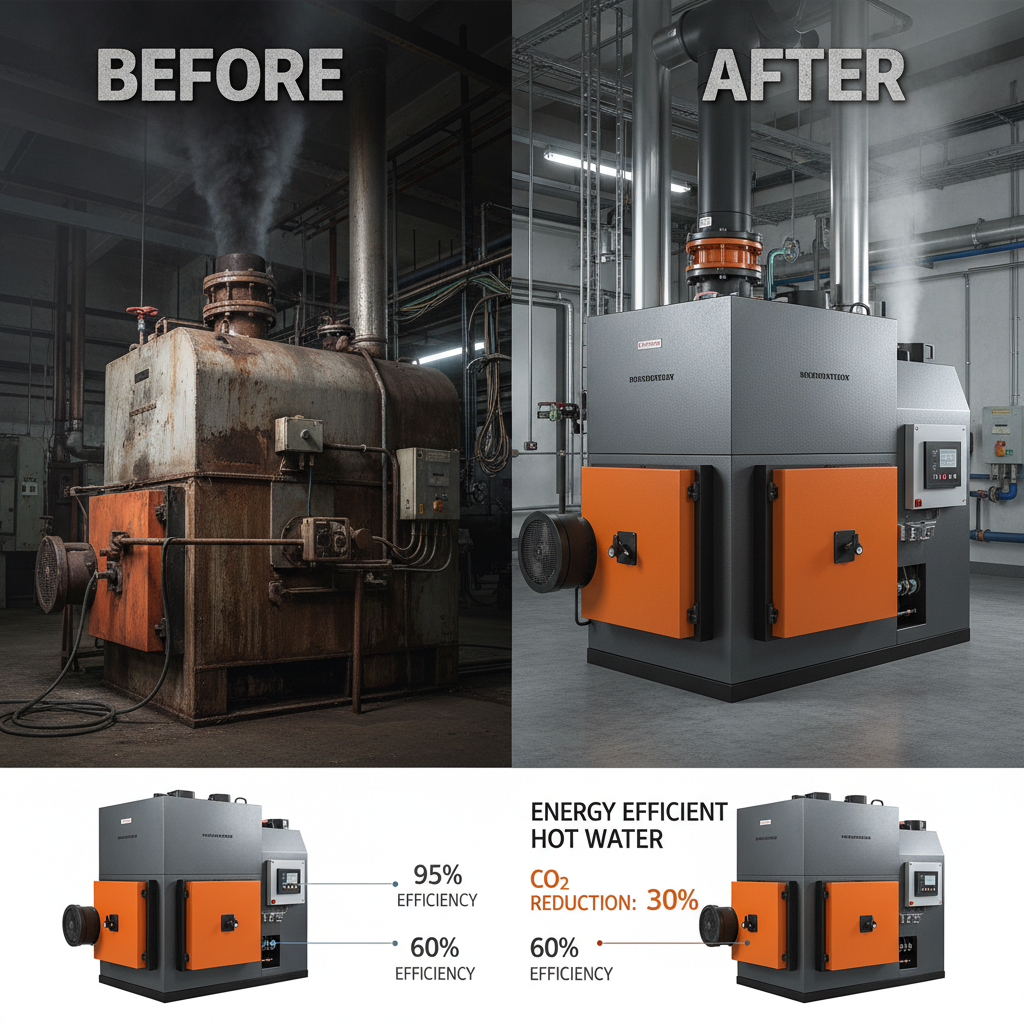
Statistics from the International Energy Agency (IEA) indicate that industrial heating accounts for a significant portion of global energy consumption. By upgrading to high-efficiency models, plants can reduce their thermal waste by up to 20-30%, directly impacting the bottom line. This transition is particularly critical in regions with high energy costs, where the efficiency of a boiler system determines the competitiveness of the final product in the global market.
Defining the Modern Energy Efficient Hot Water Boiler
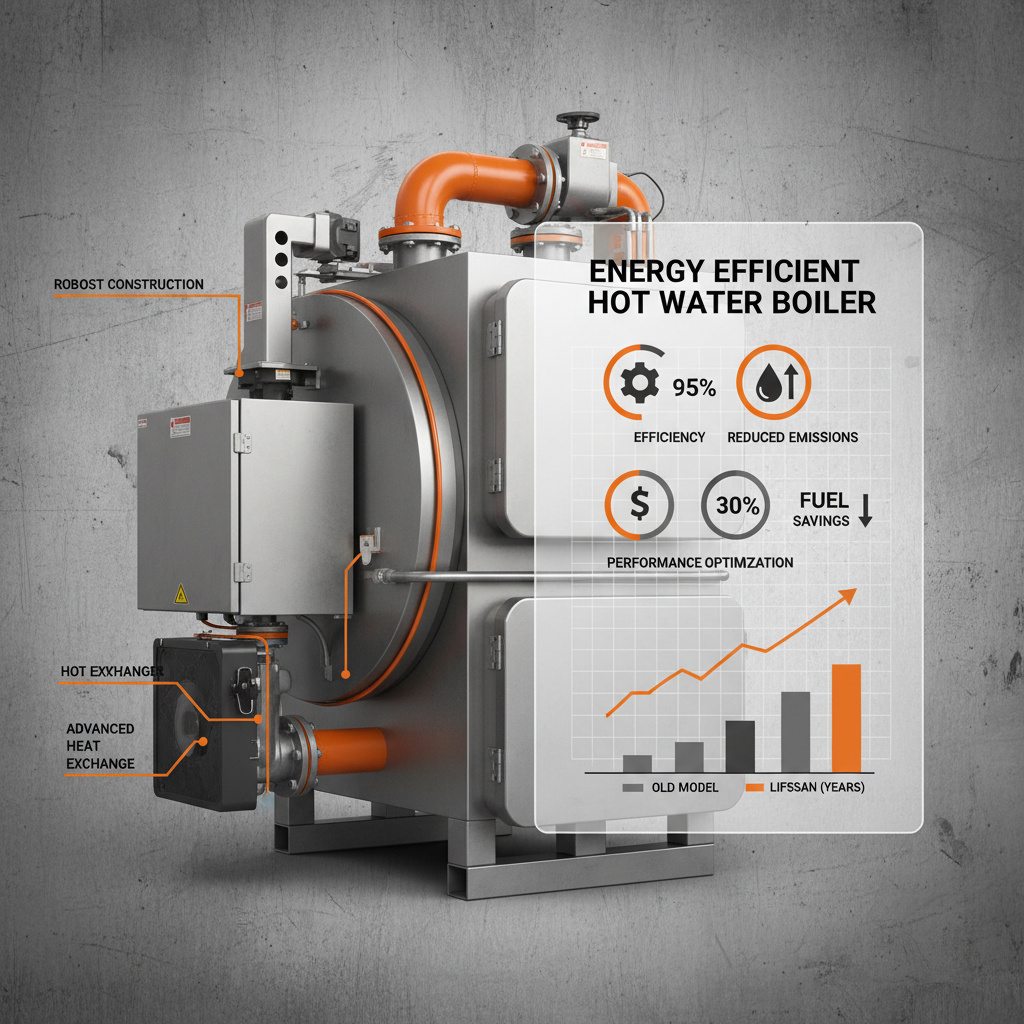
At its core, an energy efficient hot water boiler is a pressurized vessel designed to heat water for space heating or industrial processes using the least amount of fuel possible. Unlike traditional boilers that simply burn fuel to reach a temperature, these modern systems utilize advanced heat exchangers and combustion controls to ensure that nearly every BTU produced is transferred into the water.
This technology is deeply connected to the humanitarian need for sustainable urbanization. As cities grow, the demand for centralized heating in hospitals, schools, and residential complexes increases. Providing this heat through a high-efficiency system reduces the smog and particulate matter released into urban air, directly improving public health and living standards.
Furthermore, the definition of "efficiency" has evolved to include not just the combustion process, but the entire system's lifecycle. This includes the use of low-NOx burners, modulated firing rates to prevent "short-cycling," and the integration of digital sensors that allow the boiler to adapt its output in real-time based on the actual heat load of the facility.
Core Components driving Thermal Performance
The primary driver of an energy efficient hot water boiler is the advanced heat exchanger. By utilizing multi-pass designs or condensing technology, these components capture latent heat from exhaust gases that would otherwise be lost to the atmosphere, significantly boosting the overall system efficiency.
Another critical factor is the implementation of variable speed drives (VSDs) on pumps and fans. By modulating the flow of water and air to match the specific needs of the process, the boiler avoids the energy waste associated with constant-speed operation, ensuring that the energy efficient hot water boiler operates within its "sweet spot" of maximum efficiency.
Finally, high-grade thermal insulation and automated oxygen trim systems play a pivotal role. Proper insulation minimizes radiation loss from the boiler shell, while oxygen trim sensors continuously adjust the air-to-fuel ratio, preventing both incomplete combustion and the waste of energy caused by overheating the combustion air.
Comparative Analysis of Efficiency Metrics
Evaluating the performance of an energy efficient hot water boiler requires looking beyond the nominal efficiency rating. We must consider the "seasonal" or "operational" efficiency, which accounts for standby losses, cycling losses, and the effectiveness of the distribution system.
When comparing different technologies, such as condensing vs. non-condensing or electric vs. gas-fired, the goal is to find the balance between initial capital expenditure (CAPEX) and long-term operational expenditure (OPEX). The following data illustrates how different efficiency strategies perform across key industrial metrics.
Operational Performance of Hot Water Boiler Technologies
Global Industrial Applications and Use Cases
The versatility of the energy efficient hot water boiler makes it indispensable across diverse geographies. In the pharmaceutical industry in Europe, these boilers provide precise temperature control for sterilization and clean-room heating, where a fluctuation of even one degree can compromise a batch of medicine.
In contrast, in the remote industrial zones of Southeast Asia, modular high-efficiency boilers are deployed to support food processing plants. These units are often chosen for their ability to handle variable fuel qualities while maintaining a high thermal output, ensuring that local agri-businesses can scale their operations without incurring unsustainable energy costs.
Long-Term Value and Sustainability Benefits
Investing in an energy efficient hot water boiler provides a dual benefit: immediate financial relief and long-term brand equity. From a logical perspective, the reduction in fuel consumption leads to a lower Total Cost of Ownership (TCO). When companies report their ESG (Environmental, Social, and Governance) metrics, the transition to high-efficiency heating serves as a tangible proof of their commitment to sustainability.
Beyond the numbers, there is a profound emotional angle related to trust and safety. High-efficiency boilers are typically equipped with superior safety valves and automated shutdown protocols, providing peace of mind to operators and ensuring the dignity of workers who no longer have to deal with the hazards of antiquated, leaking, or unstable heating systems.
Moreover, the reliability of these systems reduces unplanned downtime. In critical infrastructure like hospitals, the failure of a heating system can be catastrophic. The robustness of a modern, energy-efficient design ensures a steady supply of hot water, reinforcing the trust that stakeholders and the public place in the institution's ability to provide essential services.
Future Innovations in Boiler Technology
The trajectory of the energy efficient hot water boiler is moving toward total digitalization and "green" fuel integration. We are seeing the rise of hydrogen-ready boilers, which are designed to switch from natural gas to hydrogen fuel with minimal modification, potentially bringing industrial heating to a true zero-emission state.
AI-driven predictive maintenance is another game-changer. By using IoT sensors to monitor heat flux and vibration, these boilers can now predict a component failure before it happens. This transforms the maintenance model from "reactive" to "proactive," further enhancing the system's overall energy efficiency by preventing the performance degradation that occurs as parts wear down.
As we look forward, the integration of hybrid systems—combining solar thermal collectors with high-efficiency boilers—will become the standard. This holistic approach ensures that the most sustainable energy source is always used first, with the boiler acting as a precision-controlled backup, maximizing the ecological footprint of the facility.
Comparative Analysis of Future Boiler Technology Trends
| Technology Trend |
Efficiency Impact |
Implementation Difficulty |
Environmental Score (1-10) |
| Hydrogen Combustion |
High |
Complex |
10 |
| AI Predictive Control |
Moderate |
Easy |
8 |
| Condensing Heat Exchangers |
Very High |
Moderate |
9 |
| Hybrid Solar-Boiler |
Extreme |
High |
10 |
| Low-NOx Burner Retrofits |
Moderate |
Very Easy |
7 |
| Electric Heat Pump Integration |
High |
Moderate |
9 |
FAQS
Efficiency is primarily achieved through the reduction of heat loss. This is done via condensing heat exchangers that recover latent heat from flue gases, high-density insulation to prevent radiation loss, and modulating burners that adjust fuel consumption based on real-time demand rather than operating on a simple on/off cycle.
While initial costs are higher, most industrial facilities see a return on investment within 18 to 36 months. This is driven by a significant reduction in monthly fuel bills and lower maintenance costs due to the advanced materials and automated monitoring systems found in energy efficient hot water boilers.
Yes, most modern boilers are designed for compatibility. However, to maximize the benefits of an energy efficient hot water boiler, we recommend auditing your piping for insulation leaks and ensuring that your pumps are compatible with the variable flow rates of high-efficiency systems.
Condensing boilers produce acidic condensate. Therefore, they require specific materials (like stainless steel) and a proper drainage system. Water treatment is essential to prevent scaling, which can drastically reduce the efficiency of the heat exchanger over time.
Steam boilers heat water to its boiling point to create steam for high-temp processes, while hot water boilers heat water to a specific temperature for distribution. Hot water boilers are generally more efficient for space heating and lower-temp industrial needs because they avoid the high energy cost of vaporization.
Traditional boilers "cycle" (turn full-on then full-off), which wastes energy during every startup. A modulating energy efficient hot water boiler acts like a dimmer switch, adjusting the flame intensity to exactly match the heat loss of the building, maintaining a steady temperature and reducing fuel waste.
Conclusion
The transition to an energy efficient hot water boiler is a pivotal step for any industrial operation seeking to balance profitability with planetary responsibility. By combining advanced heat recovery, precision combustion controls, and durable materials, these systems drastically reduce the carbon footprint of thermal energy production while slashing operational costs. We have explored how these technologies not only meet current global standards but also pave the way for a future of hydrogen and AI-driven energy management.
As energy regulations tighten and the cost of carbon emissions rises, the ability to generate heat efficiently will become a primary competitive advantage. We suggest that facility managers conduct a comprehensive thermal audit to identify waste points before upgrading their systems. Investing in high-efficiency technology today is the only way to ensure long-term resilience, safety, and sustainability in an increasingly green economy. Visit our website for more professional solutions: www.hzsteamboiler.com






 English
  Arabic
  Bengali
  French
  German
  Hindi
Hindi  Indonesian
  Kazakh
  Khmer
Khmer  Korean
  Kyrgyz
  Lao
Lao  Latin
Latin  Mongolian
  Nepali
  Russian
  Turkish
  Turkmen
  Uzbek
Uzbek