Look, thermal oil boilers… they’re not exactly glamorous, right? But spend enough time on sites, smelling the oil, watching the engineers tweak the settings, and you realize they’re the unsung heroes. Lately, everyone’s talking about efficiency – squeezing every last BTU out of everything. It's all about reducing emissions, costs, and just making things… smarter. To be honest, though, "smart" doesn’t always mean simpler.
I’ve seen so many designs where they try to overcomplicate things. Especially with the heat transfer fluid circulation. People get hung up on flow rates and pressure drops, and forget about accessibility for maintenance. You have to be able to get in there and clean it, or you’re just building a headache for someone down the line. Have you noticed how often those little things get overlooked? It's always the little things.
And the fluid itself… that’s a whole story. It’s not just any oil, you know. We mostly use mineral oils – they’re pretty stable, handle the high temps well, and don’t smell too bad. Though, some of the synthetic blends… woof. They have a distinct chemical smell. You can tell a good batch by the viscosity, the way it coats your fingers. It shouldn’t be too thin, or it’ll evaporate quickly, but not so thick you struggle to pump it. I encountered a bad batch at the Xinyu factory last time – smelled like burnt rubber. Sent it right back.
Global Relevance and Applications of Thermal Oil Boilers
These aren’t just sitting in some factories in Germany, you know. They’re everywhere. Chemical plants, food processing, pharmaceuticals… any place that needs precise, consistent heat. I was talking to a guy in Thailand last year, supplying a thermal oil boiler for a rubber processing plant – huge demand there. The UN uses them in some humanitarian operations, too, for mobile sterilization units. Strangel,y enough, you see them even in some smaller-scale breweries.
The growth is pretty steady, driven by stricter energy regulations and the need for more efficient heating solutions. Reports from the World Bank show a significant uptick in demand in developing countries as they industrialize. It's about finding a balance between power and reliability. A power outage can ruin a whole batch of product, but a properly maintained thermal oil boiler… well, it just keeps ticking.
Defining Thermal Oil Boiler Technology
Okay, so what is a thermal oil boiler? Basically, it's a closed-loop system that heats a special oil – that’s the heat transfer fluid we talked about – to high temperatures. Unlike steam boilers, they don't produce steam. They directly heat the process. This is key because it means you get much more efficient heat transfer and can control the temperature much more precisely.
It connects directly to modern industry by providing a reliable and efficient source of process heat, critical for everything from chemical reactions to maintaining the precise temperatures needed for pharmaceutical production. And, honestly, it’s relevant to humanitarian needs because of its portability and ability to operate without a constant water supply, making it ideal for remote or disaster-stricken areas.
It's more than just a box that burns fuel, though. It's a carefully engineered system designed for specific applications. And that's where the challenges start...
Core Components and Operational Principles
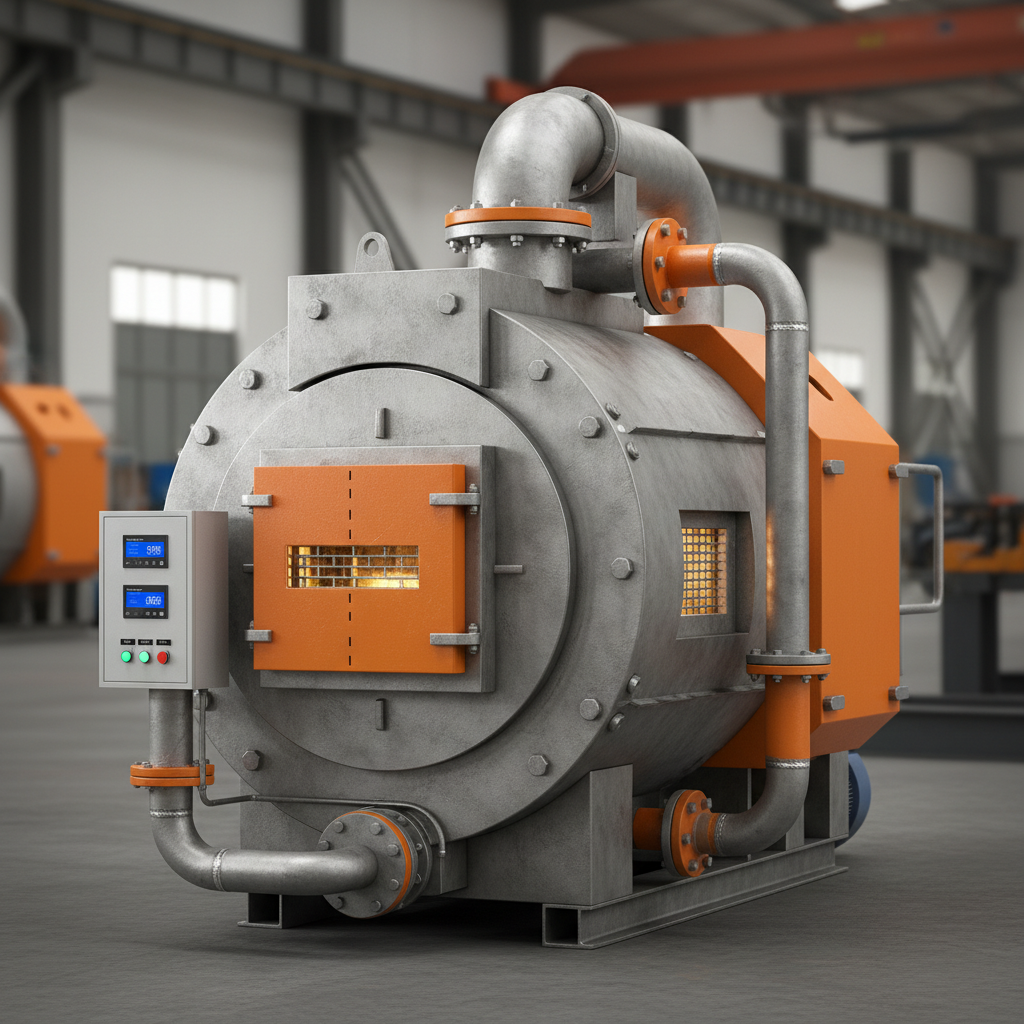
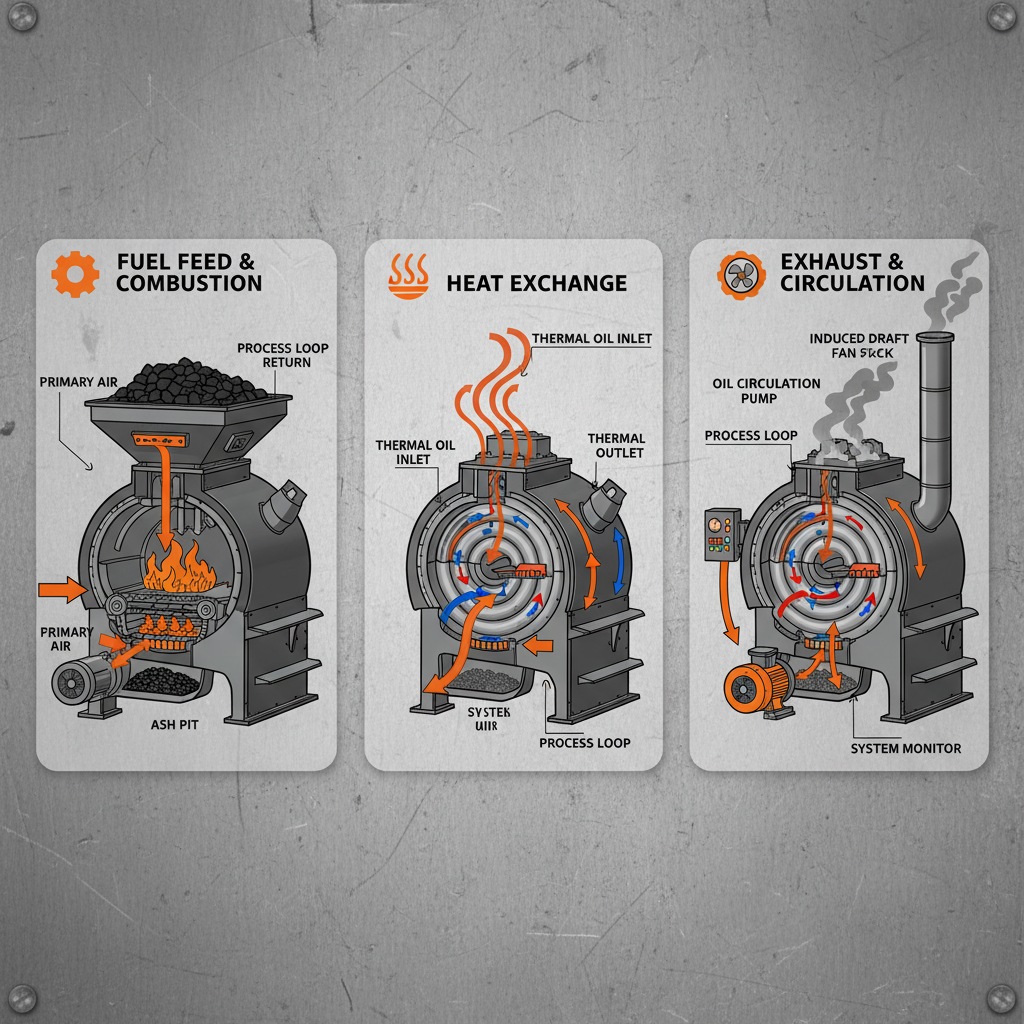
Let's break down the guts of these things. First, you've got the burner – usually gas or oil-fired, though electric is becoming more common. Then, the heating coil, where the oil circulates and absorbs the heat. Then, the expansion tank, to accommodate the oil's volume changes as it heats up. Crucially, there’s the pump – it’s the heart of the system. If that pump goes, everything stops.
The control system is another big one. Modern boilers use PLCs (Programmable Logic Controllers) to precisely regulate the temperature and flow rate. But even with all that tech, it still comes down to good sensors and reliable instrumentation. I’ve seen PLC’s give up the ghost in the heat of a Malaysian summer. Redundancy is key! Anyway, I think having a good operator who actually understands the process is more important than the fanciest control system.
The oil circulates through the process, releasing its heat, and then returns to the boiler to be reheated. It’s a closed loop, which minimizes losses and keeps everything running efficiently. Regular maintenance – oil analysis, pump checks, burner cleaning – is essential. Neglect that, and you're asking for trouble.
Practical Applications Across Diverse Industries
You’ll find them in the chemical industry, providing heat for reactors and distillation columns. In the food industry, they’re used for everything from pasteurization to evaporation. Pharmaceuticals rely on them for precise temperature control during drug manufacturing. They even show up in textile dyeing and finishing.
In remote industrial zones – like some of the oil fields in Siberia – they're often the only viable heating solution because they don’t require a constant water supply. That’s a huge advantage. Post-disaster relief operations are another area where they’re invaluable. A mobile sterilization unit powered by a thermal oil boiler can quickly and efficiently sterilize medical equipment in the field.
Thermal Oil Boiler Efficiency Comparison
Advantages and Long-Term Value Proposition
The biggest advantage is the precise temperature control. You can get within a degree or two, which is crucial for many processes. Then there's the reliability. A well-maintained thermal oil boiler can run for decades. They're also relatively safe – no risk of explosions like with steam boilers. It's about giving peace of mind.
But they're not perfect. The oil needs to be replaced periodically, which is a cost. And they're not as efficient as some of the newer technologies, like heat pumps. But for high-temperature applications, they're still hard to beat. Plus, the ability to customize them to specific needs is a huge benefit.
Future Trends and Technological Advancements
We’re seeing a push for more sustainable heat transfer fluids – bio-based oils and synthetic fluids with lower environmental impact. There's also a lot of development going on in the area of heat recovery. Capturing waste heat and using it to preheat the oil is a big win for efficiency.
Digitalization is playing a role, too. Remote monitoring and predictive maintenance are becoming more common, allowing operators to identify potential problems before they lead to downtime. Automation is also increasing, with more and more processes being controlled by PLCs and other automated systems. It’s getting pretty high-tech, I tell you.
The combination of these trends is leading to more efficient, reliable, and sustainable thermal oil boiler systems.
Challenges and Potential Solutions in Thermal Oil Boiler Systems
The biggest challenge? Thermal degradation of the oil. Over time, it breaks down, forming sludge and reducing its heat transfer capacity. Regular oil analysis is crucial, but it's not always enough. Fouling on the heat transfer surfaces is another problem. Proper water treatment and filtration can help, but it's an ongoing battle.
Finding skilled technicians is another hurdle. These systems require specialized knowledge and experience. We need to invest in training and education to ensure there's a qualified workforce to maintain them. That's always been tricky.
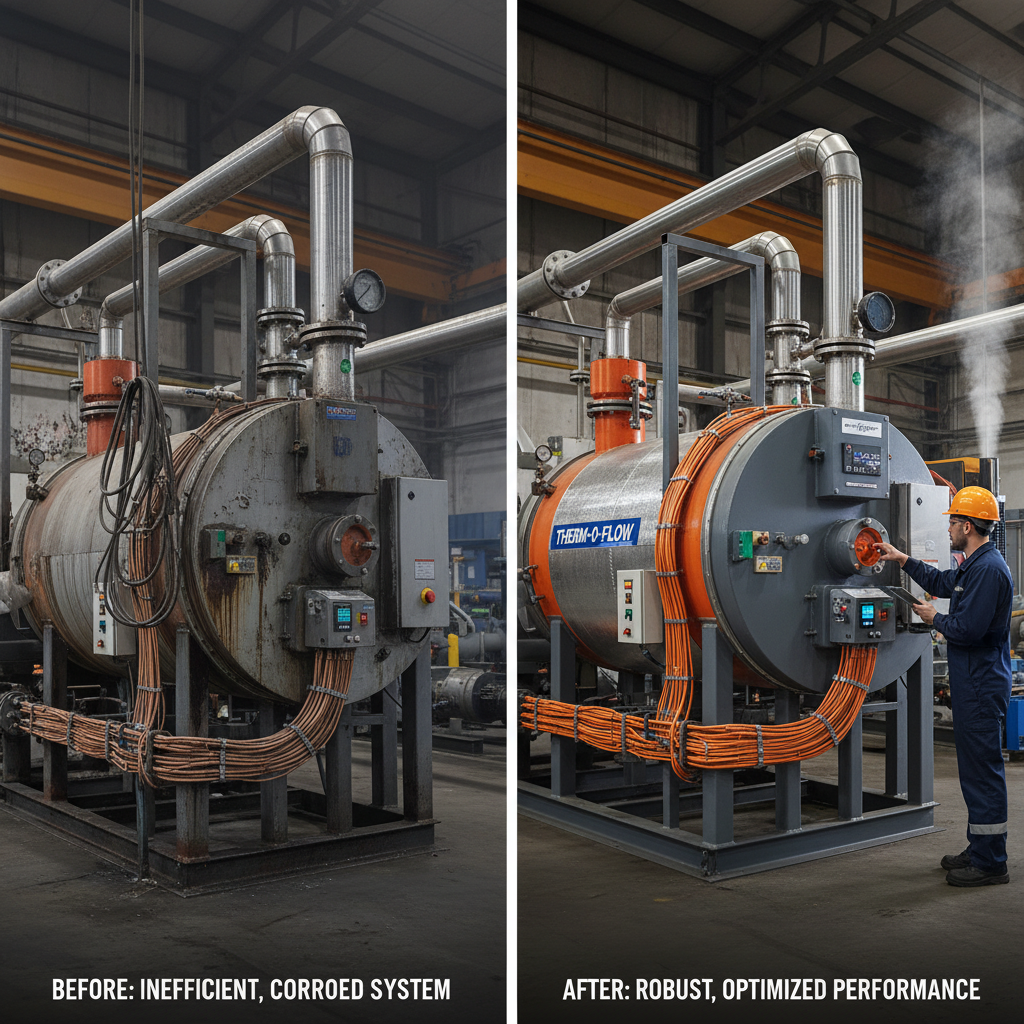
A lot of people skip regular cleaning, they think it doesn't matter. It does. I’ve seen boilers caked in carbon deposits, barely able to transfer any heat. It all boils down to maintenance and preventive care.
Summary of Thermal Oil Boiler System Challenges and Solutions
| Challenge |
Impact |
Severity (1-10) |
Potential Solution |
| Oil Degradation |
Reduced Heat Transfer Efficiency |
8 |
Regular Oil Analysis & Replacement |
| Fouling of Heat Transfer Surfaces |
Decreased Thermal Performance |
7 |
Water Treatment & Regular Cleaning |
| Lack of Skilled Technicians |
Poor Maintenance & Increased Downtime |
6 |
Enhanced Training Programs |
| Pump Failure |
Complete System Shutdown |
9 |
Preventative Maintenance & Redundancy |
| Control System Malfunctions |
Inaccurate Temperature Control |
5 |
Regular Calibration & Backup Systems |
| Corrosion |
Component Degradation |
7 |
Proper Material Selection & Protective Coatings |
FAQS
Honestly, if you treat it right, a thermal oil boiler can easily last 20-30 years, sometimes even longer. But it all depends on maintenance. Regular oil changes, burner inspections, and keeping everything clean are crucial. Skip those steps, and you’ll be looking at repairs much sooner. It's not glamorous work, but it pays off in the long run. A lot depends on the initial quality too, naturally.
They can be, if you’re not careful. Fuel costs are the biggest factor, obviously. But optimizing the system – making sure the oil temperature is properly set, minimizing heat losses, and using efficient burners – can significantly reduce operating costs. The best approach is a comprehensive energy audit. Have you noticed how much energy some facilities waste just through inefficient heating?
Most commonly, natural gas and fuel oil are used. Propane is also an option. Increasingly, we're seeing interest in using biomass and other renewable fuels, but that often requires modifications to the boiler and careful consideration of emissions. It's not always a simple switch. You've got to consider the whole picture.
That depends on the oil type and operating conditions. Generally, you're looking at every 5-10 years, but regular oil analysis is the best way to determine when it's time for a change. If you see signs of degradation – increased acidity, sludge formation – it’s time to get it replaced. Ignoring it will lead to problems down the line, I guarantee it.
High temperatures are the biggest hazard. Proper insulation, guarding, and personal protective equipment are essential. Also, you need to be careful about oil leaks – thermal oil can cause severe burns. And, of course, regular inspections and maintenance are key to preventing accidents. Safety first, always. Never take shortcuts.
Absolutely. That's one of their biggest strengths. You can tailor the size, capacity, and features to your specific needs. I remember last month, that small boss in Shenzhen who makes smart home devices insisted on changing the interface to . He needed a very precise temperature control for a coating process, and a standard boiler wouldn't cut it. It was a pain to do, lots of extra engineering, but we got it done. It's all about problem-solving.
Conclusion
So, thermal oil boilers. They're not the flashiest technology, but they're incredibly reliable, efficient, and versatile. They’re the workhorses of many industries, providing consistent and precise heat where it’s needed most. They're constantly evolving with new fluids and controls, and their long-term value is undeniable.
Ultimately, whether this thing works or not, the worker will know the moment he tightens the screw. You can have all the fancy engineering in the world, but if it's not practical, if it doesn’t make the job easier and safer for the people on the ground, then it’s all for nothing. And honestly, that's the lesson I’ve learned after all these years on-site.







 English
  Arabic
  Bengali
  French
  German
  Hindi
Hindi  Indonesian
  Kazakh
  Khmer
Khmer  Korean
  Kyrgyz
  Lao
Lao  Latin
Latin  Mongolian
  Nepali
  Russian
  Turkish
  Turkmen
  Uzbek
Uzbek