




Oct . 28, 2026 22:47 Back to list
What Is a Hot Water Boiler? FAQ on Integration, Spare Parts and Maintenance
QUESTIONS & ANSWERS
What Is a Hot Water Boiler? FAQ on Integration, Spare Parts and Maintenance
This FAQ answers the most common buyer questions about what is a hot water boiler, how gas- and oil-fired models work, how they integrate into industrial systems, what spare parts matter most, and how to keep them running efficiently. Every answer is drawn from HEBEI HONGZE BOILER MANUFACTURING CO., LTD. product documentation for its Gas (oil) hot water boiler and Oil-fired hot water boiler ranges.

What Is a Hot Water Boiler? Frequently Asked Questions
Business buyers across the US, Middle East, Europe and Southeast Asia regularly ask HEBEI HONGZE BOILER MANUFACTURING CO., LTD. the same cluster of questions before and after purchasing a gas- or oil-fired hot water boiler. This FAQ addresses those questions in one place, covering the fundamentals of what is a hot water boiler, its working principle, technical parameters, fuel options, integration, efficiency, spare parts and routine maintenance.
1. What is a hot water boiler and how does it differ from a steam boiler?
A hot water boiler heats water to a target temperature without boiling it, supplying a continuous flow of high-temperature hot water for space heating or industrial process heating. A steam boiler, by contrast, heats water until it vaporises into steam for high-energy industrial processes. The two types serve different thermal load requirements and operate at different output conditions.
2. How does a gas- or oil-fired hot water boiler work?
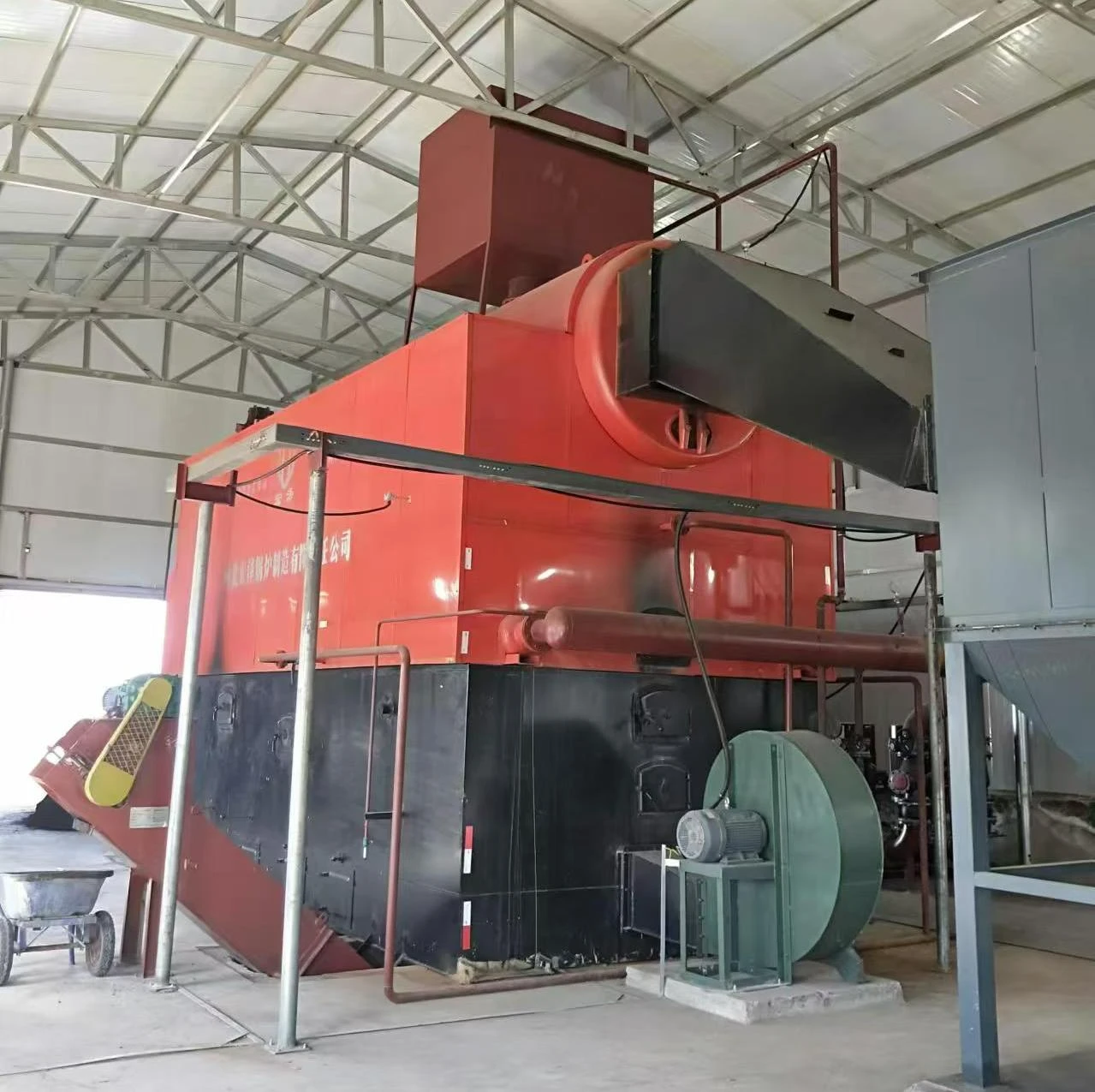
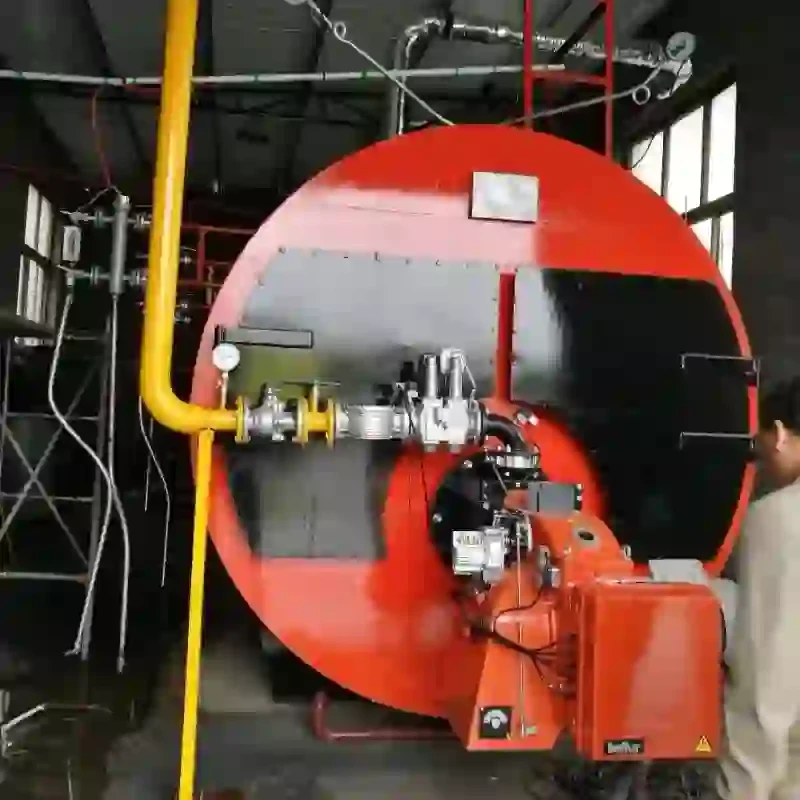
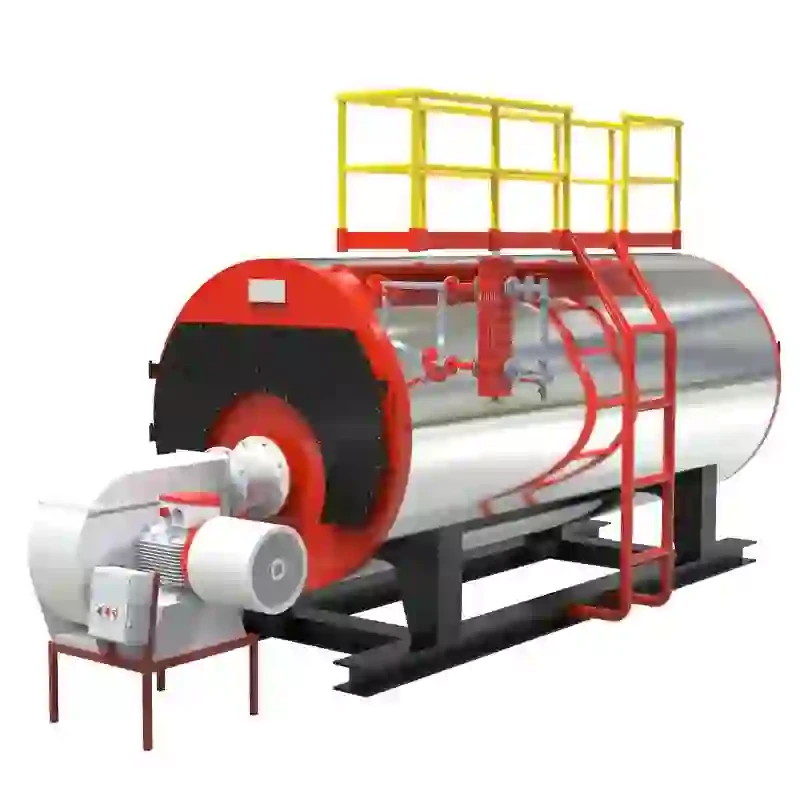
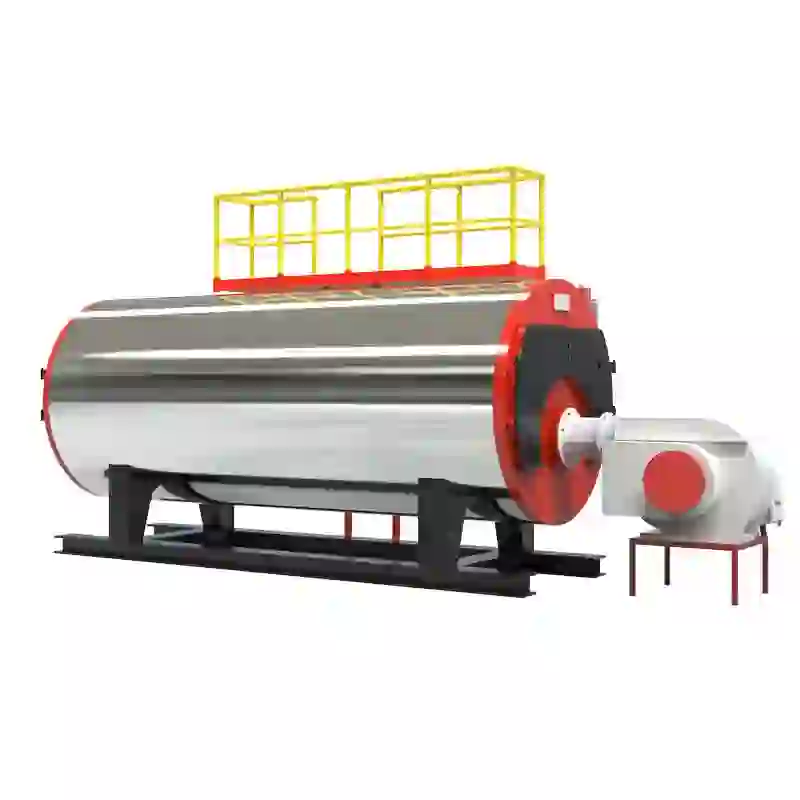
In a gas-fired model, natural gas (or an alternative fuel such as LPG, biogas or coke oven gas) is burned in the furnace. The heat released by combustion is transferred through the pot barrel and flue passages to the water inside, continuously raising its temperature until the required hot-water supply is reached. In an oil-fired model, diesel, heavy oil or light oil is burned in the furnace to produce a flame and high-temperature flue gas; the flame and flue gas transfer heat continuously to the water in the pot, causing it to circulate and absorb heat.
3. What fuels are compatible with HEBEI HONGZE BOILER MANUFACTURING CO., LTD. hot water boilers?
The gas-fired range accepts natural gas, LPG, biogas and coke oven gas. The oil-fired range is compatible with diesel, heavy oil and light oil. Each series is a distinct product line designed for its respective fuel type; contact HEBEI HONGZE BOILER MANUFACTURING CO., LTD. to select the model that matches your fuel supply.
4. What are the rated thermal power and working pressure ranges?
Across the WNS-series models documented by HEBEI HONGZE BOILER MANUFACTURING CO., LTD., rated thermal power runs from 0.7 MW to 46 MW (the broader catalogue references up to 140 MW). Working pressure is rated at 0.7 MPa, 1.0 MPa or 1.25 MPa depending on the model. Output water temperatures range from 95 °C to 130 °C, with a standard feed-water temperature of 70 °C.
| Model (example) | Thermal Power (MW) | Working Pressure (MPa) | Output Water Temp (°C) |
|---|---|---|---|
| WNS0.7-0.7/95/70-Q(Y) | 0.7 | 0.7 | 95 |
| WNS7.0-1.0/115/70-Q(Y) | 7.0 | 1.0 | 115 |
| WNS21-1.25/130/70-Q(Y) | 21 | 1.25 | 130 |
| WNS46-1.25/130/70-Q(Y) | 46 | 1.25 | 130 |
Consult the full parameter table or contact HEBEI HONGZE BOILER MANUFACTURING CO., LTD. for the complete model list up to 140 MW.
5. What thermal efficiency can I expect, and how is it achieved?
Thermal efficiency across the WNS-series models ranges from 93.8% to 98.1%. Three design features drive this performance:
- Large pot-barrel heating area — maximises heat transfer from the furnace.
- Corrugated liner and threaded flue pipes — increase surface area, create turbulence in the flue gas, and slow gas flow to recover more heat.
- Energy saver and condenser — recover residual heat from exhaust gases before they leave the stack.
6. How does the hot water boiler control emissions?
An imported low-NOx burner is fitted as standard, holding NOx emissions at or below 30 mg/Nm³. Continuous flue-gas temperature monitoring (exhaust temperatures range from approximately 134 °C to 169 °C across models) supports ongoing emissions compliance.
7. How does the control system work and what safety features are included?
The boilers use a full-automatic PLC/digital control system that:
- Monitors water temperature and working pressure in real time.
- Triggers over-temperature and over-pressure safety warnings automatically.
- Adjusts the air-fuel ratio to maintain stable combustion and consistent output temperatures.
A high-sensitivity gas valve group is also integrated to detect and prevent gas leakage, guarding against safety incidents.
8. How does a hot water boiler integrate into an existing heating or process system?
Hot water boilers connect to a facility's pipework loop and circulate heated water through heat exchangers, radiators or process equipment. The full-automatic control system manages thermal load balancing — matching heat output to real-time demand — and supports remote control interfaces for centralised management of multiple boiler units. The rated output temperature (95 °C–130 °C depending on model) should be matched to the process temperature required by connected equipment.
9. What are the most important spare parts to keep on hand?
The key components identified in the product documentation are: the imported burner, gas valve group, corrugated liner, threaded flue pipes, condenser/energy saver and the automatic control system sensors. Maintaining a stock of burner components and gas valve parts is advisable because these are critical to both safe operation and NOx compliance.
10. What does routine maintenance involve, and how does the control system support it?
The full-automatic control system includes system logs, performance tracking and auto-diagnostics that schedule maintenance before failures occur. The simplified structural design and modular components are intended to make routine tasks — including inspection of the corrugated liner, flue passages and gas valve group — fast and cost-effective. The product warranty period is 12 months; within that period, any manufacturing defects are repaired free of charge by HEBEI HONGZE BOILER MANUFACTURING CO., LTD.
11. What is the expected service life of an oil-fired hot water boiler?
The oil-fired hot water boiler is designed with a service life of up to 15 years. This is supported by an advanced furnace design that ensures a reasonable flue-gas flow rate, preventing wear and extending the working life of the boiler shell and internals.
12. How does a gas/oil hot water boiler differ from a thermal oil (hot oil) boiler?
A hot water boiler uses water as the heat carrier and typically outputs at 95 °C–130 °C under working pressures of 0.7–1.25 MPa, making it suited to space heating and process hot-water applications. A thermal oil (hot oil) boiler uses heat-transfer oil as the carrier, enabling outlet temperatures up to 320 °C while operating at lower system pressures (0.8–1.0 MPa). The thermal oil system uses a circulating pump to force liquid-phase heat transfer to one or more pieces of process equipment, and is preferred where high temperatures with precise control are required but direct steam or pressurised hot water is not practical.
THE PEOPLE

About the author
THE COMPANY
HEBEI HONGZE BOILER MANUFACTURING CO., LTD.
Founded in1994and covering 100 thousand square meters of productionarea,Hebei Hongze Boiler Manufacturing Co., Ltd. is a high-tech enter-prise focusing on the design, manufacturing and installation of boilers andenvironmental protection equipment in China.As of now ,Hongze hasobtained more than 30 product patents.…
About Us ↗Visit company website ↗YOUR NEXT STEP
Bring your brief. Start a useful conversation.
Use case, specification, quantity and delivery window: make the next conversation specific.
-
How to Choose a Coal Fired Steam Boiler for Your Process
NewsNov.02,2026
-
Industrial Hot Water Boiler High Pressure System for Efficiency
NewsJul.01,2026
-
High Efficiency Industrial Hot Water Boiler Heat Exchanger Systems
NewsJun.29,2026
-
Guide to Optimizing Hot Water Boiler Expansion Tank Pressure
NewsJun.27,2026
-
How to Fix and Prevent Boiler Water Temperature Too Low Issues
NewsJun.26,2026


 English
 Arabic
 Bengali
 French
 German
 Hindi
 Indonesian
 Kazakh
 Khmer
 Korean
 Kyrgyz
 Lao
 Latin
 Mongolian
 Nepali
 Russian
 Turkish
 Turkmen
 Uzbek


