




Nov . 10, 2026 00:38 Back to list
How to Choose a Biomass Fired Steam Boiler for Your Process

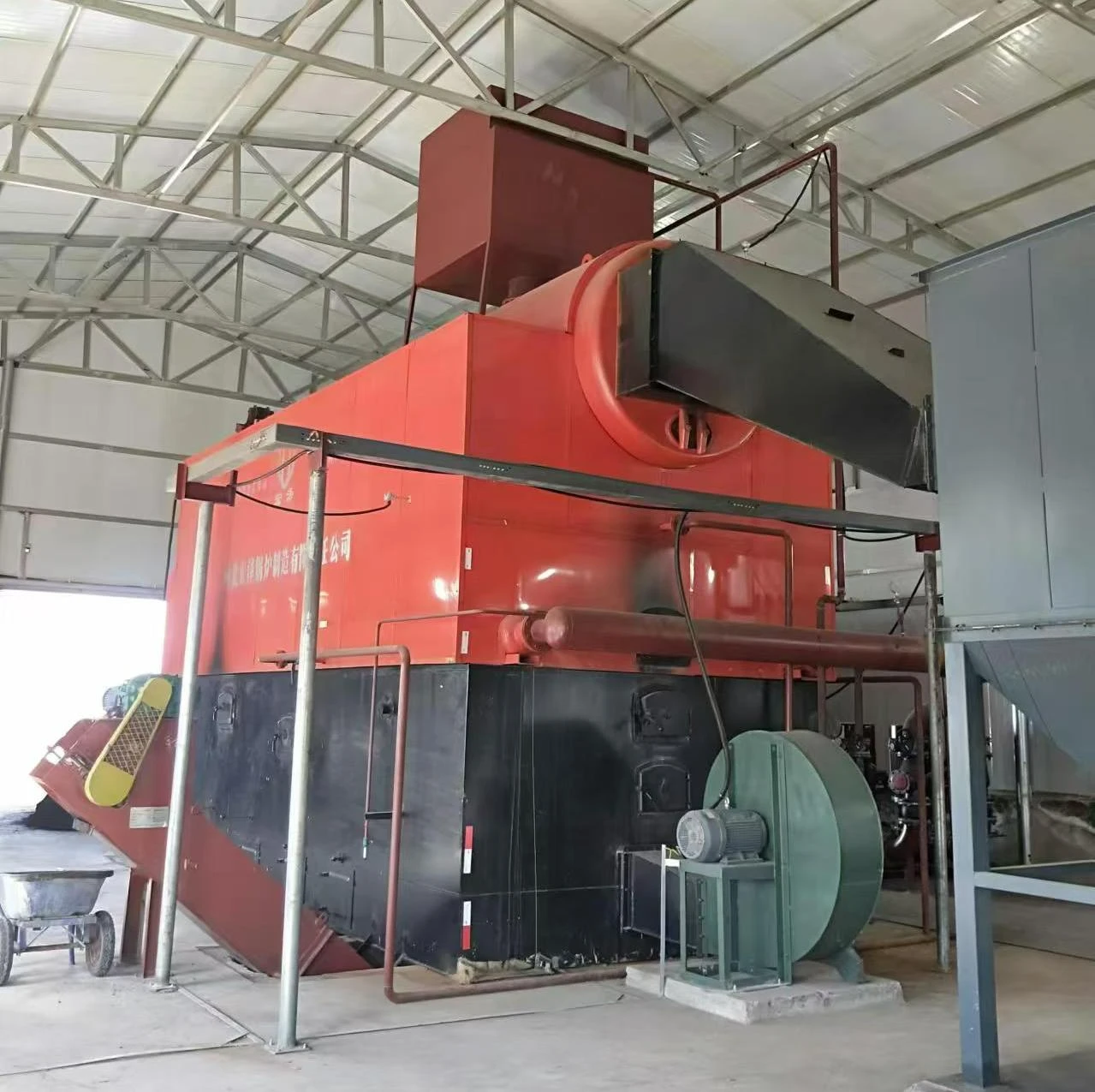
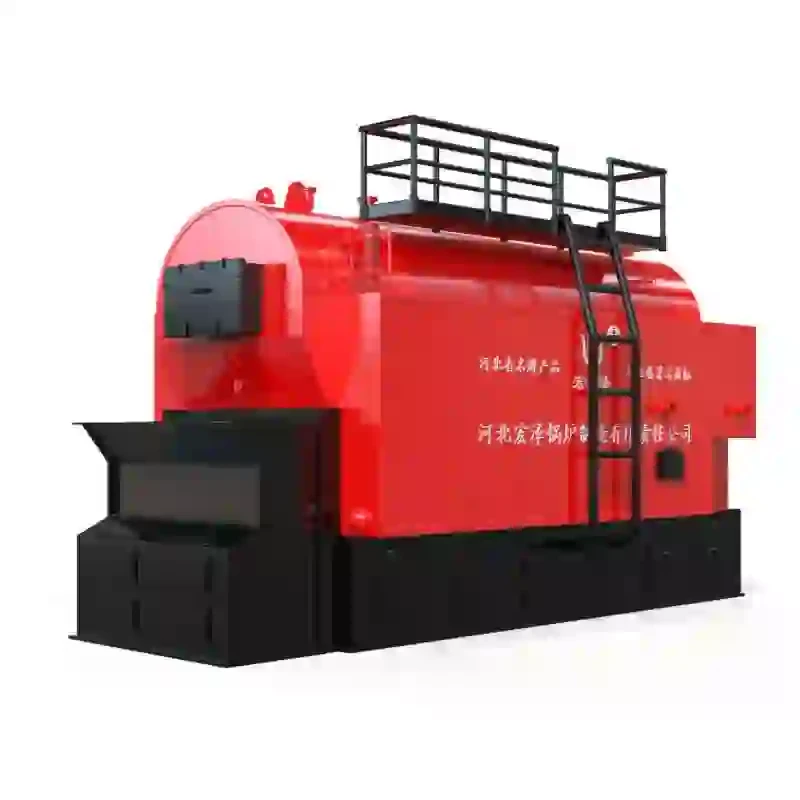
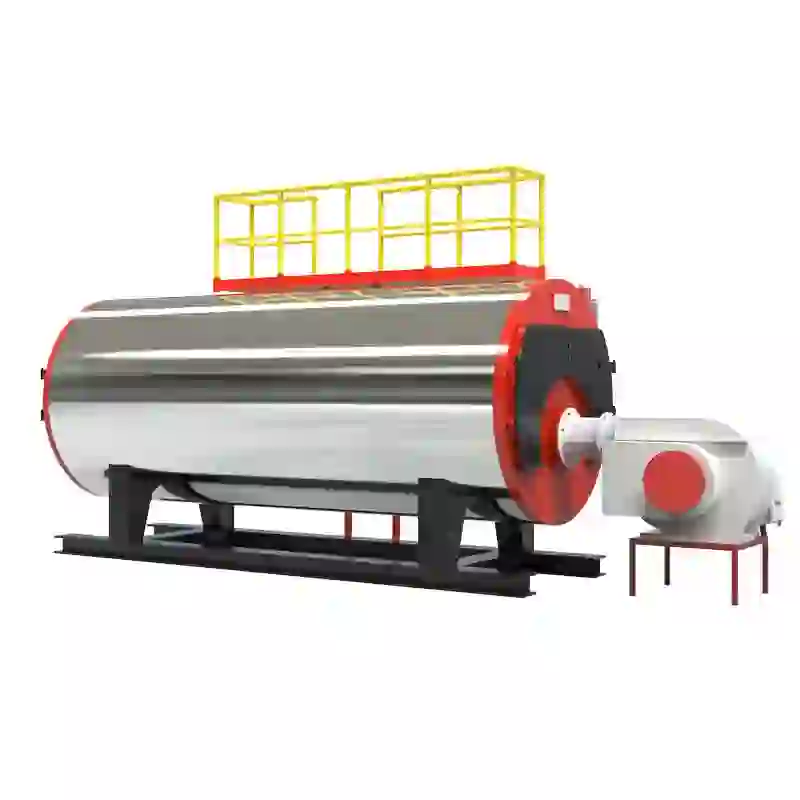
A biomass fired steam boiler should match steam demand, working pressure, fuel supply and feedwater conditions. The range covers 1 to 200 t/h and 1 to 2.5 MPa, while listed DZL models specify capacity, steam temperature, efficiency and exhaust temperature. Use these values to narrow the boiler size before planning fuel handling, feedwater connection and the flue route.
Match rated steam capacity and working pressure to peak process demand, including required steam temperature and normal feedwater temperature.
Confirm that the available biomass fuel, its physical form and daily quantity fit the intended handling arrangement.
Compare steam humidity, thermal efficiency, exhaust gas temperature, furnace arrangement and insulation for the selected capacity and pressure.
Start with steam demand and pressure
Choose the boiler size from the peak steam load your process requires, then match the working pressure to the equipment receiving that steam. Our biomass fired steam boiler range is rated from 1 to 200 t/h, with working pressure from 1 to 2.5 MPa. The listed DZL models cover 1 to 80 t/h and include working pressures of 0.7, 1.0, 1.25 and 1.6 MPa.
A small process line can be assessed against the 1 and 2 t/h models. The 1 t/h choices include DZL1-0.7-AⅡ and DZL1-1.0-AⅡ. At 4 t/h, the listed choices include 1.0, 1.25 and 1.6 MPa, giving you several pressure points to compare with the process requirement. Larger users can review listed models from 6 through 80 t/h.
Use peak demand, not only average demand, when comparing sizes. The boiler design allows overloaded operation of 15% to 20%, but that margin does not replace a load calculation. Send us the required steam capacity, pressure and steam temperature so we can identify a suitable model.
Check the fuel supply and handling arrangement
This boiler suits facilities with a regular supply of biomass briquette, biomass pellet, wood, rice husk, peanut shell or crop straw. The fuel decision affects the surrounding layout because the plant must receive, store and feed the chosen material consistently.
Picture a rice-processing facility with rice husk available as a byproduct. The boiler can be considered when the site can move that fuel from storage to the furnace at the required operating rate. A plant using pellets or briquettes should make the same check for storage and feeding. Wood and crop straw are also listed fuel options, so the purchase should follow the material actually available at the plant.
Confirm the fuel form before requesting a final configuration. A loose agricultural residue, pellet and briquette have different physical forms even though each is listed for this boiler. Include the fuel name, typical moisture condition, particle form and expected daily quantity in your inquiry. These details help us review the fuel-handling arrangement around the boiler.
Match steam quality and thermal performance to the process
The large drum provides large steam dehydration space, and steam humidity is below 3‰. This suits processes that need relatively dry steam, including industrial heating applications where excess water can affect heat transfer or downstream equipment.
Thermal efficiency varies by model. In the listed DZL range, values run from 86.8% for the 1 t/h models to 91.8% for the DZL80-1.6-AⅡ model. A 4 t/h unit reaches 87.5% at 1.0 or 1.25 MPa and 87.9% at 1.6 MPa. At 20 t/h, the listed efficiencies are 89.7% at 1.25 MPa and 90.3% at 1.6 MPa.
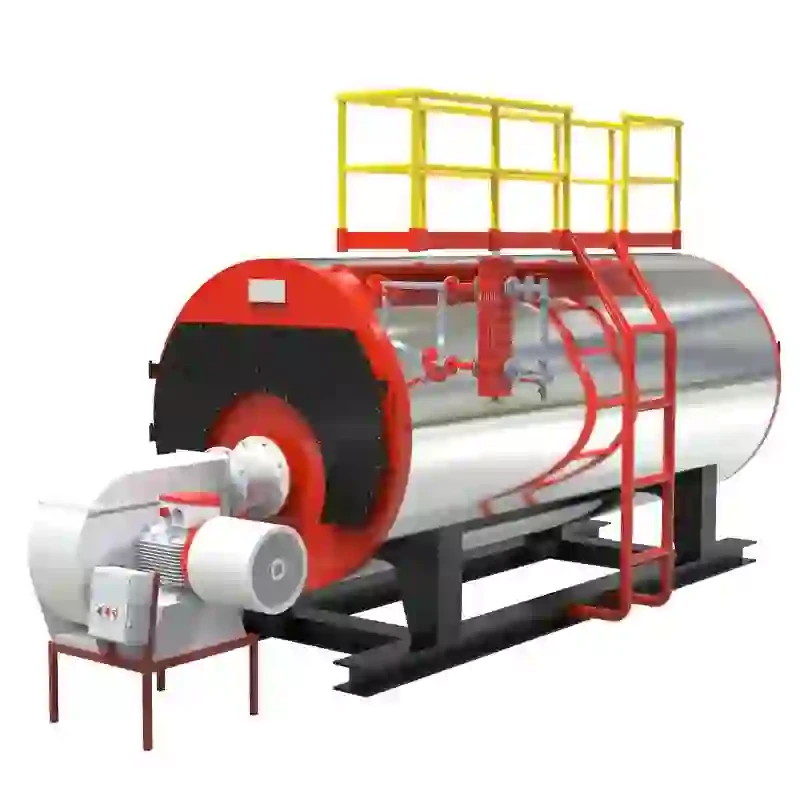
The boiler uses a horizontal three-pass water-fire tube arrangement, threaded flue tubes and water-cooled wall tubes on the left and right sides of the hearth. Four insulation layers, firebrick, aluminum silicate board, rock wool and insulation brick, are specified to reduce heat loss. Listed exhaust gas temperatures range from 120°C to 130°C. Use the specific model's value when discussing fuel use, flue routing and heat recovery with your engineering team.
Consider feedwater and steam temperature together
Feedwater temperature is part of the model selection. The listed values range from 20°C to 104°C, depending on the model and pressure. The 1 t/h models use 20°C feedwater, while several 1.6 MPa models list 104°C feedwater.
A plant with an existing feedwater system should compare its normal temperature with the intended boiler model. A process expansion may also require a pressure review if the new equipment operates at a different steam condition. Provide normal feedwater temperature, required steam pressure and required steam temperature together.
The listed steam temperatures range from 170.41°C to 204.31°C. At 1.25 MPa, the 2 t/h and 4 t/h models are listed at 193.3°C. At 1.6 MPa, the 4 t/h model is listed at 204.31°C. These figures help narrow the model family before the surrounding steam system is designed.
Select the model family for the site
The 1 to 4 t/h models fit smaller process loads that need a defined steam pressure and a regular supply of pellets, wood or agricultural residue. The 6 to 20 t/h models suit larger continuous heating loads where steam demand and feedwater conditions justify a higher-capacity unit. The 40 to 80 t/h models address high-volume steam requirements within the listed DZL range.
For example, a requirement for 6 t/h at 1.6 MPa points to the DZL6-1.6-AⅡ entry, while a requirement for 20 t/h at the same pressure points to DZL20-1.6-AⅡ. A requirement for 40 t/h at 1.25 MPa points to DZL40-1.25-AⅡ. Compare the exact capacity-pressure entry instead of choosing from capacity alone.
Questions to settle before ordering
Which 2 t/h pressure options are available?
Three 2 t/h entries are listed: DZL2-0.7-AⅡ, DZL2-1.0-AⅡ and DZL2-1.25-AⅡ. Their rated steam temperatures are 170.41°C, 184.07°C and 193.3°C, while each lists 20°C feedwater. Thermal efficiency is 86.9%, 87.1% and 87.3%, respectively. This gives a small process line specific pressure and efficiency points to compare.
What changes between the 1.25 MPa and 1.6 MPa 20 t/h models?
The DZL20-1.25-AⅡ model lists 193.3°C rated steam temperature, 20°C feedwater, 89.7% thermal efficiency and 124°C exhaust gas temperature. The DZL20-1.6-AⅡ model lists 204.31°C steam, 104°C feedwater, 90.3% efficiency and 123°C exhaust gas temperature. Use these paired values when the process can accept either pressure condition.
Which listed model has the lowest exhaust gas temperature?
The DZL80-1.6-AⅡ model has the lowest listed exhaust gas temperature at 120°C. It is rated for 80 t/h at 1.6 MPa, with 204.31°C steam, 104°C feedwater and 91.8% thermal efficiency. This entry suits a high-volume process whose required capacity and pressure match those conditions, so include the flue route in the site review.
Prepare the details for a suitable selection
Our biomass fired steam boiler fits plants that can match steam demand and pressure to a regular biomass fuel supply. Send us the required capacity, working pressure, steam temperature, feedwater temperature, fuel type, fuel form and daily quantity. Include the boiler-room dimensions and flue route so we can review the intended arrangement with you.

About the author
The company
HEBEI HONGZE BOILER MANUFACTURING CO., LTD.
Founded in1994and covering 100 thousand square meters of productionarea,Hebei Hongze Boiler Manufacturing Co., Ltd. is a high-tech enter-prise focusing on the design, manufacturing and installation of boilers andenvironmental protection equipment in China.As of now ,Hongze hasobtained more than 30 product patents.…
About Us ↗Visit company website ↗-
How to Choose a Coal Fired Steam Boiler for Your Process
NewsNov.02,2026
-
What Is a Hot Water Boiler? FAQ on Integration, Spare Parts and Maintenance
NewsOct.28,2026
-
Industrial Hot Water Boiler High Pressure System for Efficiency
NewsJul.01,2026
-
High Efficiency Industrial Hot Water Boiler Heat Exchanger Systems
NewsJun.29,2026
-
Guide to Optimizing Hot Water Boiler Expansion Tank Pressure
NewsJun.27,2026


 English
 Arabic
 Bengali
 French
 German
 Hindi
 Indonesian
 Kazakh
 Khmer
 Korean
 Kyrgyz
 Lao
 Latin
 Mongolian
 Nepali
 Russian
 Turkish
 Turkmen
 Uzbek


